20.5.26 Full text: Ilyonectria radicicola fungus germinates four UK hardy orchid species
My previous Blog post was a summary of this article, and it has provoked some interest so I am posting the full text here to make it open-access online. It was published in the:
Journal of the Hardy Orchid Society, Vol 23 No.2 (121), Spring 2026, pp 54-61.
Ilyonectria radicicola fungus isolated from soil germinates four UK hardy orchid species
Tony Heys
© Copyright Anthony D. Heys, 2026
Introduction
Like many in the Hardy Orchid Society I am accustomed to using pure cultures of specific fungi to germinate hardy orchids on agar nutrient media: the symbiotic method. There are several different fungal strains in the Society’s Fungus Bank (Q414, AMYG, A36, AP6) curated by John Haggar. Most familiar, probably, is “B1”; a strain of Ceratobasidium very effective for most species of Dactylorhiza, Anacamptis and some others (Heys 2012).
This still leaves quite a lot of orchid species which don’t germinate well or at all by the symbiotic method, unfortunately. For the past year or more I have been trying a different approach of incubating small samples of native soil with added orchid seeds to see if they are able, ex situ, to support germination. If so, can this property be retained by transfer into an artificial soil-like substrate and from there subcultured and sustained indefinitely? The aim, of course, would be to eventually grow plants on to flowering size.
I was very interested to read Tim Conway’s recent article in this Journal (Conway 2026) outlining the wide germination success he has had with non-agar substrates. I confess I wasn’t very aware of what the Cardboard Orchid Sowing Group on Facebook were doing but I did borrow the idea from them of using cardboard and other materials for a soil-like substrate. My approach has been a bit different but complementary, and has identified a new fungus for our armoury.
Germination in soil
Two ways of using soil baited with orchid seeds to isolate fungi are exemplified by the in situ buried slide frame method of Rassmussen & Whigham (1993), and the ex situ incubation of soil and seeds of Brundrett et al (2003). I used a simplified version of the latter. Soil samples were taken from the vicinity of orchids growing in a wooded area of a West Sussex garden. They were incubated, untreated and unadulterated, in sealed Petri dishes but with added dry seeds of Early purple orchid (Orchis mascula, OM). Starting in May they were kept in the dark but subjected to outdoor ambient temperatures in a shady area out of the heat of direct sun. By September one of three Petris had developed a tight cluster of at least 5 small, white protocorms of OM (Figure 1). This observation was at 16 weeks after initiation. Under the microscope rhizoids and dense fungal hyphae could be seen. More soil Petris were made at this time, yielding more protocorms after a few months.
Transfer of protocorms to artificial soil
The largest original protocorm was transferred to what I describe as a Sterilised Artificial Soil (SAS) medium in another Petri, along with adjacent smaller protocorms and a small amount of adhering soil material (Figure 2). Dry OM seeds were added in to see if a “second generation” of germination could be achieved. The SAS consisted of shredded cardboard, some original native soil, composted bark, and wildflower meadow grass seed. Sterilisation of these components was achieved by oven baking the mix at 120 deg. C for 1 hour, incubation in deionised water for 24 hours, then autoclaving in a pressure cooker for 25 minutes. This was also sufficient to kill the meadow grass seed and prevent it from germinating later on; it was included to be a food source, not to make a mini-lawn. It is actually quite hard to kill!
The first protocorms transferred to SAS grew strongly and there was a vigorous outgrowth of fungal hyphae seen in the medium. Secondary germination of the added OM seeds was seen after 6 weeks at a distance of more than 3cm from the first protocorms. This shows the germinating property was transferable to the SAS medium.
Subculturing and substrate components
From this point I have subcultured repeatedly by moving protocorms with some of the surrounding substrate, usually a shred or two of cardboard, to Petris of fresh substrate. Dry orchid seed is added in routinely to cause new rounds of germination and protocorm production. The composition of the SAS has been varied to try to find an optimum. The best combination so far seems to be a base of roughly equal mix of shredded cardboard and composted bark. To this is added a small amount of native soil, either untreated or sterilised along with the other components. It is not clear yet whether sterilised meadow grass seed is necessary or even helpful.
Subcultures don’t always produce any germination. This is perhaps to be expected since we are dealing with complex biological mixtures. Also it can be 3 to 4 months or more before new orchid seed germination appears, so cultures shouldn’t be abandoned too early. When orchid seedlings are at the stage of having a green shoot or one or two green leaves I have transferred them to similar SAS media in plastic pots - the kind used by supermarkets for hummus, tzatziki, etc. - so they have more headroom (Figure 3).
Testing other orchid species
So far Greater butterfly orchid (Platanthera chlorantha), Lesser butterfly orchid (Platanthera bifolia) and Twayblade (Neottia ovata) have also been successfully germinated into protocorms (Figures 4 & 5). I have tried a few other species without germination yet but this could be due to the unpredictable nature of the subcultures, the long timescales, or even the viability of the seed sample used. Also there are also a lot of species I haven’t tried yet!
Fungus isolation on agar
Meanwhile the intention was to obtain pure cultures of the germinating fungus on agar so it could be identified and its properties examined. Two small, original protocorms were transferred separately to Petri dishes with slopes of low-strength Basic Oats Medium in agar. The composition of Basic Oats Medium (BOM) is typically 3.5g/L oat powder, 7.5g/L agar in tap or deionised water with a tiny amount of marmite to give B vitamins – approx. 0.1g/L. For this situation I reduced the oats concentration to 1.0g/L.
The protocorms were each placed on the base of the dish about 1 cm from the agar slope edge so that fungus can grow out across the dry gap. This leaves any contaminating bacteria or other microbes behind. In both cases a pure, white, fungal outgrowth was obtained (Figure 6). The fungus to be identified has thus grown directly out of a protocorm. One of these cultures was sent to CAB International for analysis.
Germinating capability of fungus on agar
After an agar culture had been sent away for analysis I also cultured and subcultured the fungus several times on BOM agar. Dry OM seeds were added to see if germination could be achieved on agar. Germination did not occur in any of 6 attempts over 3 different batches and more than 6 months incubation. But when chunks of the agar-grown fungus were added back to Petris of SAS I found germination could occur (Figure 7). On two occasions it resulted in many protocorms - one was with sterilised native soil as a substrate component and one was with an untreated native soil component.
Fungus Identification & Report by CABI
The microbial services laboratories of CABI (Commonwealth Agricultural Bureaux International) analysed the fungus. Morphology under the microscope initially indicated a species in the genus Fusarium. There was delay at this point due to CABI being in the throes of “moving house” from Egham to Ascot! Eventually DNA extracted from a single spore isolate was amplified by polymerase chain reaction for sequencing. Sequence data were compared to the EMBL database and the (NCBI) BLAST database.
Analysis of the internal transcribed spacer (ITS) rDNA region revealed the fungus to not, in fact, be a Fusarium but in the closely related genus Ilyonectria. A second DNA locus, the histone gene, was needed to tie down identity to a particular species. This located it in the I. radicicola species complex. The top matches at >99% homology were to I. pseudodestructans and I. crassa which are closely related members of the complex.
To quote the CABI report directly: “The I. Radicicola species complex are primarily soil-borne pathogens, commonly associated with root rot disease of a range of woody and herbaceous plants. Members of this species complex have previously been isolated from orchids, primarily as pathogens. However in a study by Maldonado G P et al (2020) it was reported that a member of the genus Ilyonectria isolated from roots of the orchid Pleurothallis coriacardia promoted embryo development in vitro in the orchid’s seeds, although… the authors did not establish which Ilyonectria species was involved.” P. coriacardia is an epiphytic “Bonnet” orchid found in South America.
Ilyonectria radicicola and the Nectriaceae family
Ilyonectria and Fusarium are closely related genera within the Nectriaceae family and I have scoured the internet to find out more about them. They are in the Ascomycota division of fungi, which is interesting because most well-known hardy orchid germinating fungi are Basidiomycota: eg Tulasnella, Sebacina, and Ceratobasidium (Rhizoctonia).
The Ilyonectria radicicola species complex of soil-borne fungi causes root rot and rusty root in various commercially important plants such as Panax (ginseng), Narcissus, Lillium, Cyclamen and also black foot disease of grapevines, strawberries, raspberries and various woody plants. Its anamorph (asexual stage) is Cylindrocarpon destructans which produces conidia and chlamydospores. The latter lie dormant in soil for long periods and through cold winters to re-infect roots later on. In root rot the fungus grows both inter- and intra- cellularly. The host wilts and there are soft, black diseased patches, sometimes with a strong odour. Rusty root may be less serious to the host - raised rusty spots form on the surface but can be scraped off. Ilyonectria are thought not to be specifically wood-rotting fungi.
The Nectriaceae family is large, diverse, and worldwide comprising at least 70 genera and more than 1000 species associated with soil and decaying wood. They can be harmless saprophytes, plant endophytes, pathogens affecting crops and trees, or even human pathogens. Fusarium species are saprophytes and plant pathogens causing blights, root or bulb rots and vascular wilts. The Fusarium links to orchids include: fatal wilts in Cymbidium but also endophytes promoting disease resistance, and seed germination in Dendrobium, Cymbidium (Shah et al 2025) and Cypripedium species (Vujanovic et al 2000).
In summary, there are multiple reports of Fusarium species linked to orchids as germinators, endophytes or pathogens and some reports for Ilyonectria as pathogens in orchids. But I only have the one reference from CABI (above) for an Ilyonectria germinating an epiphytic orchid. I have not yet found any references linking it with hardy orchid germination.
Discussion
This work with Ilyonectria radicicola (ILR) newly isolated from natural soil and cultured in sterile artificial soil as an orchid seed germinator is still at an early stage. The furthest progress so far is to produce Orchis mascula seedlings with two green leaves. It has also been possible to subculture the fungus several times and still retain germinating ability.
Some pure fungal isolates, such as B1, Q414, etc, can be subcultured indefinitely on agar nutrient media and continue to germinate orchid seeds successfully, even though the nutrient source is very different from soil. On the other hand there are many instances where other fungi have been cultured from orchids and they initially have seed germinating capability but it is quite soon lost. I don’t know any specific references to this but I believe, anecdotally, it is quite common. New isolates have traditionally been subcultured on agar based medium with oats, potato, malt or other added nutrient.
This isolate of ILR grows well on agar but is apparently not maintained in the right metabolic state to germinate OM seeds. However when agar-grown portions were added in to sterile artificial soil they have caused germination. An essential co-factor for the fungus seems to be missing in agar but present in native soil and the artificial soil – I like to think of it as the germination “Secret Sauce” factor!
The primary food source is probably different in native soil - perhaps cellulose, cell wall polysaccharides, lignin, suberin etc. - and thus a likely candidate. The success of the Cardboard Orchid Sowing Group methods would suggest so. One would expect a different battery of digestive enzymes to be secreted compared to that on agar. Soil is such a complex milieux; perhaps mineral ingredients, other specific microbes acting in synergy, biofilms, pH etc are also important? This is all speculation of course. Repeated subculturing from native soil into a different substrate runs the risk of losing the Secret Sauce eventually.
Forthcoming challenges with this isolate include optimising the sterile substrate composition so as to promote and preserve germinating capability and also how best to support the further growth of the orchid seedlings. Results so far suggest ILR has good potential for enabling the symbiotic growth of some hardy orchid species we have previously been unsuccessful with.
References
Brundrett, M.C. et al (2003) Development of in situ and ex situ seed baiting techniques to detect mycorrhizal fungi from terrestrial orchid habitats. Mycological Research 107, 1210-1220
Conway, T. (2026) Cardboard sowing method. JHOS Vol. 23 No. 1 (120) 6-9
Heys, A. (2012) The B1 fungus is a Ceratobasidium. JHOS Vol. 9 No. 3 (65) 93-97
Maldonado, G.P. et al (2020) Root endophytic fungi promote in vitro seed germination. Lankesteriana 20 (1): 107-122
Rasmussen, H. N. & Whigham, D. F. (1993) Seed ecology of dust seeds in situ – a new study technique and its application in terrestrial orchids. American Journal of Botany 80 (12) 1374-1378
Shah, S. et al (2025) Extract from endophytic Fusarium isolates stimulates seed germination of the host and protocorm development of non-host orchids. Communicative & Integrative Biology vol 18 issue no. 1: 2439798
Vujanovic, V. et al (2000) Viability testing of orchid seed and the promotion of colouration and germination, Annals of Botany. Vol. 86, issue 1, 79–86

Figure 1: Original Orchis mascula (Early purple orchid) protocorms in native soil

Figure 2: Protocorms after first transfer to SAS medium

Figure 3: Orchis mascula seedlings on SAS (with some moss!)

Figure 4: Platanthera bifolia (Lesser butterfly orchid) protocorm on SAS
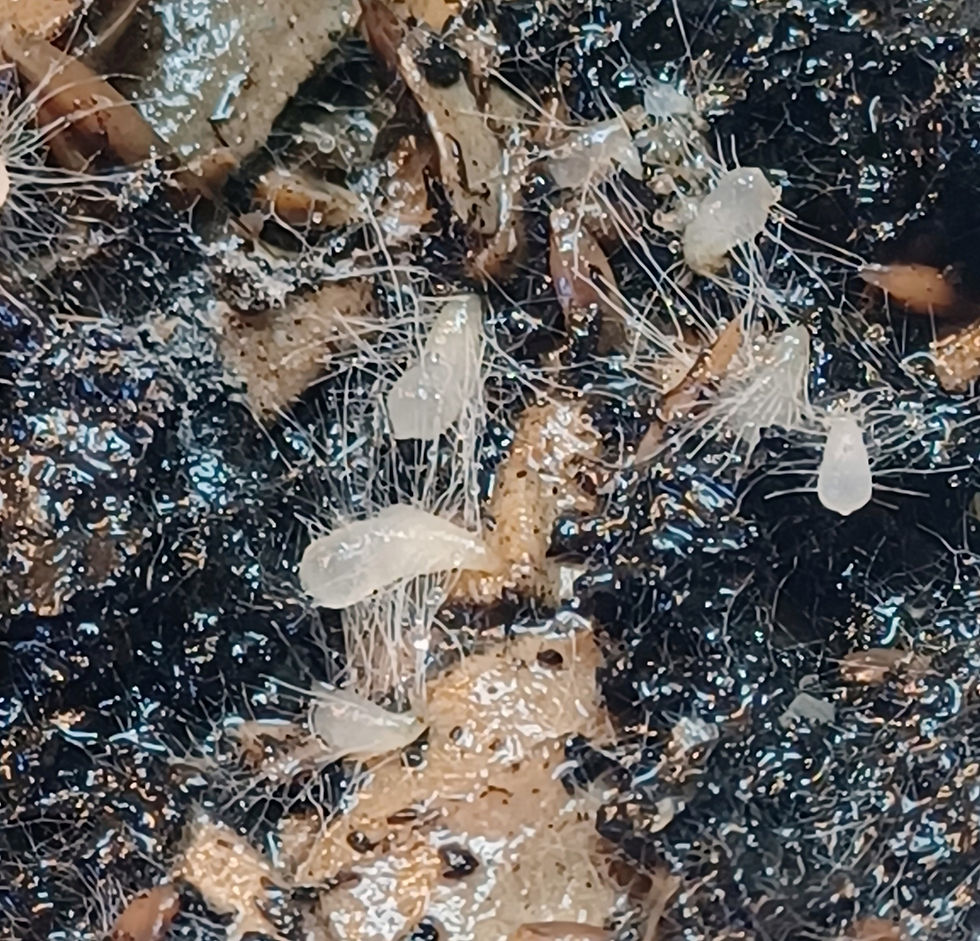
Figure 5: Neottia ovata (Twayblade) protocorms on SAS

Figure 6: Fungus grown from protocorm across a gap into BOM agar
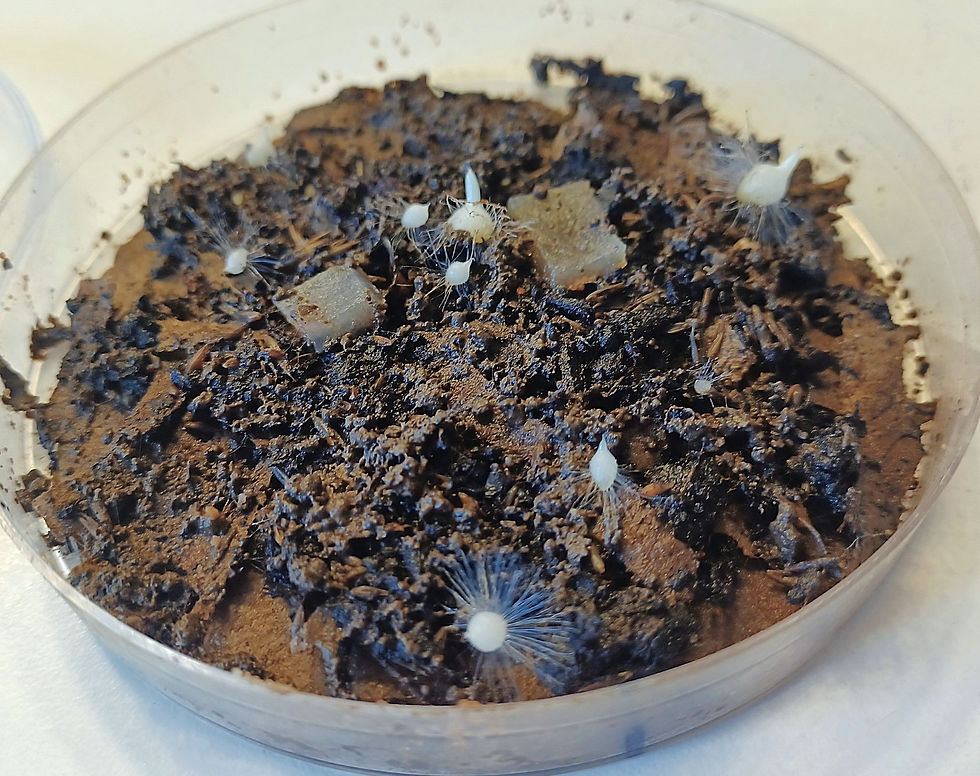
Figure 7: Orchis mascula protocorms on SAS from added-in agar chunks of ILR fungus


Comments