29.8.26 Autumn lady's-tresses

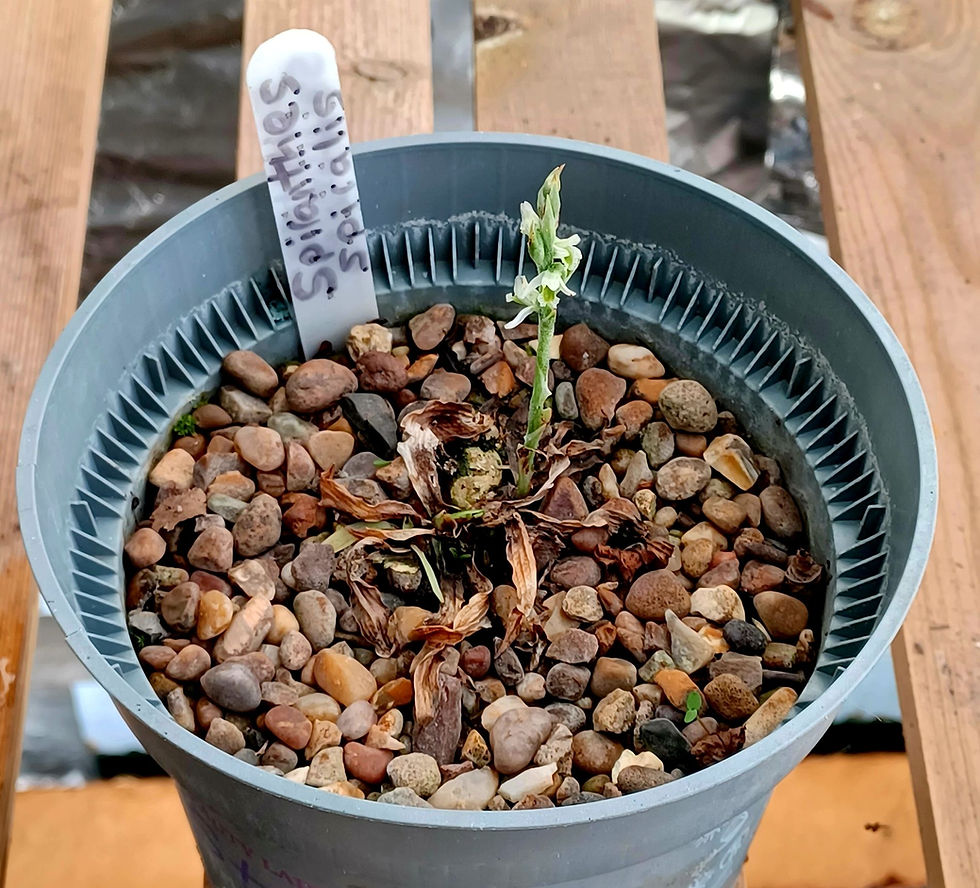
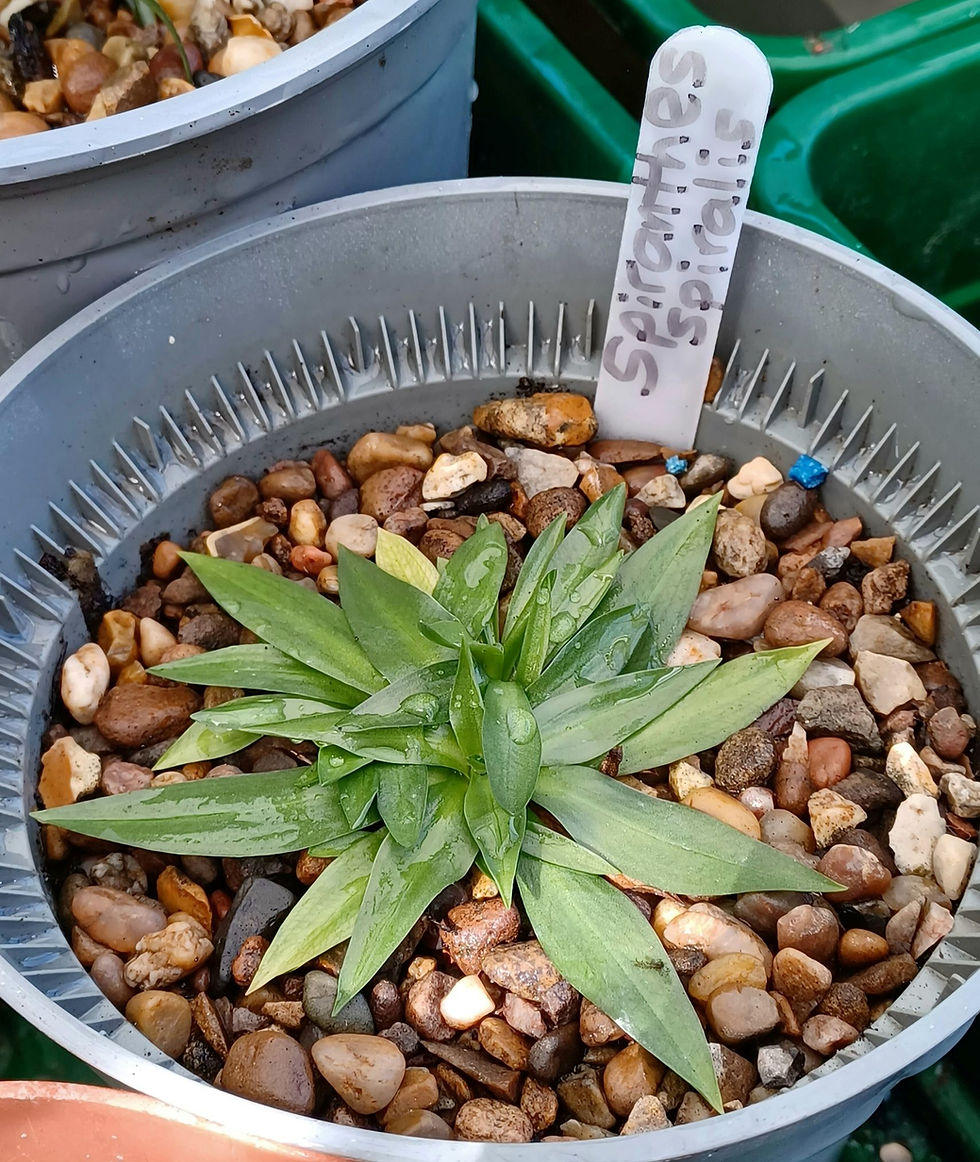
I have been growing this diminutive grey-green-white orchid (Spiranthes spiralis) from seed for some years now. It germinates perfectly well with B1 fungus on oat medium and grows without much trouble making small and very flat, dark green leaf rosettes. But growing it big enough to flower has always eluded me until now. Thus it has been very exciting to see my first flower spike bloom this week!
Underground, a cluster of vertical, fleshy, elongated tubers develops and these seem to me to be large relative to the foliage, when compared to other hardy orchid species. The Autumn lady’s-tresses apparently need three, four, five or so years of successful growth and “fattening up” of these tubers until they are energetic enough to support flowering. Patience is required.

It is a European, Mediterranean, and southern UK species of dry, alkaline grassland where the grass is short and the orchid rosette is not shaded out. It likes chalk downland, sand dunes and other grassy locations including domestic lawns.
It can flower unexpectedly in the latter in great numbers, though probably has already been there several years. Regular mowing (or grazing) doesn’t harm the leaf rosettes but takes away the emerging flower stalks in August. If mowing stops, even perhaps for just two or three weeks, then they have their chance to shine - in a modest sort of way!

It is the latest flowering UK orchid - except possibly the Ghost orchid - appearing not until late August or well into September. The Latin name reflects that the tubular green and white flowers are, unusually for orchids, arranged spirally up the 10-15 cm stem and this is perhaps their main charm when viewed normally. However when viewed under magnification the tiny flowers are elegant and impressive, especially the frothy-looking white edge to the lip.
There are a lot of white hairs all over the stem. Pollination is by bumble bees and often extensive so that much seed is produced even though the individual pods be tiny.

Curiously, the flower stalk is located to the side of the fresh leaves and not in their centre. This is because it grew from the centre of the old leaves that recently died off in early summer. The new leaves appear in late summer at the same time or a bit later than the flower stalk, and they remain in the green over winter and spring.


Comments